Posted on Thursday, August 17, 2017 by Samuel
Those who cannot remember the past are condemned to repeat it. (George Santayana)
Ignore history at your own peril. Banning flags and tearing down statues will not hide sin; make us more righteous; or prevent hate. All this is simply the outside of the cup. Americans must change within. This is the true change that Christ promised. Anyone who believes in Jesus Christ is a new creation. (2 Corinthians 5:17) There is salvation in no other name. It is the gift of God confirming the love of God and those who are loved by God love one another.
Put on then, as God’s chosen ones, holy and beloved, compassionate hearts, kindness, humility, meekness, and patience, bearing with one another and, if one has a complaint against another, forgiving each other; as the Lord has forgiven you, so you also must forgive. (Colossians 3:12-13)
Filed under: Bible, Culture, Forgiveness, Grace, History, Samuel at Gilgal | Tagged: Santayana; History; Forgiveness | 1 Comment »
Posted on Thursday, March 23, 2017 by Samuel
The most controversial aspects of The Shack‘s message have revolved around questions of universalism, universal redemption, and ultimate reconciliation. Jesus tells Mack: “Those who love me come from every system that exists. They were Buddhists or Mormons, Baptists or Muslims, Democrats, Republicans and many who don’t vote or are not part of any Sunday morning or religious institutions.” Jesus adds, “I have no desire to make them Christian, but I do want to join them in their transformation into sons and daughters of my Papa, into my brothers and sisters, my Beloved.” (Albert Mohler, The Shack – The Missing Art of Evangelical Discernment)
Filed under: Bible, Christianity, Theology, Truth | Tagged: Albert Mohler, Discernment, Universalism | Comments Off on THE SHACK’S FALSE CHRISTIAN PARADIGM
Posted on Sunday, March 19, 2017 by Samuel
 Satan’s greatest ambassadors are not pimps, politicians, or power-brokers, but pastors. His priests do not peddle a different religion, but a deadly perversion of the true one. His troops do not make a full-out frontal assault, but work as agents, sneaking into the opposing army. Satan’s tactics are studied, clever, predictable, effective. Therefore, we must always remain vigilant. “Beware of false prophets, who come to you in sheep’s clothing but inwardly are ravenous wolves. You will recognize them by their fruits” (Matthew 7:15-16a). (Tim Challies)
Filed under: Bible, Christianity, Quotes, Sermon | Tagged: false prophets, pastors, Perversion | Comments Off on DECEITFUL TEACHERS
Posted on Monday, February 27, 2017 by Samuel
-
Three-quarters of Americans (77 percent) agreed that people must contribute to their own effort for personal salvation.
-
Almost two-thirds of evangelicals (64 percent), and nearly as many Americans (60 percent) described heaven as a place where “all people will ultimately be reunited with their loved ones.”
-
Almost two-thirds (65 percent) said that most people are good by nature, even though everyone sins a little.
-
Sixty-four percent of Americans said God accepts the worship of all religions.
-
More than half (52 percent) said that Jesus is the “first and greatest being created by God.”
Filed under: Bible, Christianity, Church, Theology | Tagged: Heaven, LifeWay Research, Salvation, Worship | 1 Comment »
Posted on Saturday, February 18, 2017 by Samuel
More a nd more churches are being led into emotionalism and not Biblical Truth, and, as a result, these congregations have no spiritual power of discernment. They are willing to compromise Biblical truth for emotionalism and experience as they are taught to seek after a god who is not the God of the Bible. (Justin Pierce, The Importance Of Truth and Standing Against Apostasy)
Filed under: Bible, Christianity, Church Leadership, Truth | Tagged: Bible, Church, God, Truth | 2 Comments »
Posted on Tuesday, February 7, 2017 by Samuel
No man is excluded from calling upon God, the gate of salvation is set open unto all men: neither is there any o ther thing which keeps us back from entering in, save only our own unbelief. (John Calvin, Calvin’s Commentaries, Vol. 36: Acts 2:21)
Filed under: Christianity, Evangelism, John Calvin, Salvation | Tagged: Calvin's Commentaries, gate of salvation, unbelief | 1 Comment »
Posted on Thursday, January 26, 2017 by Samuel
The light of nature shows that there is a God, who has lordship and sovereignty over all, is good, and does good unto all, and is therefore to be feared, loved, praised, called upon, trusted in, and se rved, with all the heart, and with all the soul, and with all the might. But the acceptable way of worshipping the true God is instituted by Himself, and so limited by His own revealed will, that He may not be worshipped according to the imaginations and devices of men, or the suggestions of Satan, under any visible representation, or any other way not prescribed in the holy Scripture. (The Westminster Confession of Faith, Chapter 21)
Filed under: Christianity, Church, God | Tagged: The Westminster Confession of Faith, worshipping the true God | Comments Off on ACCEPTABLE WORSHIP
Posted on Monday, January 23, 2017 by Samuel
God is the highest good of the reasonable creature. The enjoyment of hi m is our proper; and is the only happiness with which our souls can be satisfied. To go to heaven, fully to enjoy God, is infinitely better than the most pleasant accommodations here. Better than fathers and mothers, husbands, wives, or children, or the company of any, or all earthly friends. These are but shadows; but the enjoyment of God is the substance. These are but scattered beams; but God is the sun. These are but streams; but God is the fountain. These are but drops, but God is the ocean. (Jonathan Edwards, The Works of Jonathan Edwards, Vol. 17: Sermons and Discourses, 1730-1733)
Filed under: Christianity, God, Jonathan Edwards, Reformed Christian Topics, Samuel at Gilgal | Tagged: enjoy God, Happiness, highest good | 2 Comments »
Posted on Monday, January 16, 2017 by Samuel

The matter of origins … is absolutely critical to all human thinking. It becomes critical to how we conduct our lives as human beings. Without an understanding of origins, without a right understanding of origins, there is no way to comprehend ourselves. There is no way to understand humanity, as to the purpose of our existence, and as to our destiny. If we cannot believe what Genesis says about origins, we are lost as to our purpose and our destiny. Whether this world and its life as we know it evolved by chance, without a cause, or was created by God, has immense comprehensive implications for all of human life.
Filed under: Christianity, Culture, Quotes, Truth | Tagged: chance, Genesis, God, John MacArthur | 7 Comments »
Posted on Thursday, January 12, 2017 by Samuel
The problem of lax and hypocritical Christianity is not a new one, and one of the best treatments of the e ntire subject is a classic [Holiness] written by J.C. Ryle (1816–1900), who served as the Anglican Bishop of Liverpool for twenty years…
Ryle’s work is convicting because he does not appeal to silly gimmicks and other manmade answers to the problem of sin. He appeals over and over to Scripture, to the Word of the living God, and he drives the Word of God home through careful and direct application. If you are complacent in your sin and do not want to be disturbed in your enjoyment of it, do not read Ryle [Holiness].
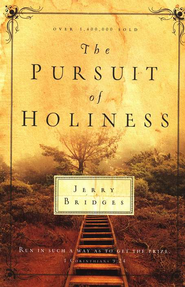
I also recommend The Pursuit of Holiness by Jerry Bridges and The Holiness of God by R.C. Sproul. – Samuel
Filed under: Bishop J. C. Ryle, Holiness, Samuel at Gilgal, Scriptures | Tagged: Holiness, hypocritical Christianity, Keith Mathison | 1 Comment »
Posted on Tuesday, January 10, 2017 by Samuel
There is no light, no knowledge, no wisdom, apart from God. All existence and all knowledge depend on God. If we have life, we live by Him. (Acts 17:28) If we have any knowledge, we know by Him. (Romans 11:36) We do not shed light on Him by the light we see. He is the origin, the source. If we have any measure of light, it is He who is shedding light on what we see, not we.
(John Piper, A Peculiar Glory, Crossway, 2016, p.160)
Filed under: Bible, Christianity, God, Truth, Worldview | Tagged: Knowledge, life, Light, Wisdom | Comments Off on LIGHT
Posted on Sunday, January 8, 2017 by Samuel
This year I will be sharing brief excerpts from the articles, sermons, a nd books I am currently reading. My posts will not follow a regular schedule but will be published as I find well-written thoughts that should be of interest to maturing Christian readers. Whenever possible, I encourage you to go to the source and read the complete work of the author.
Filed under: Bible, Christianity, Samuel A. Cain, Samuel at Gilgal | Tagged: Christian Readers, Growing Christians, Samuel A. Cain | Comments Off on SAMUEL AT GILGAL: CHANGE IN FORMAT
Posted on Tuesday, September 13, 2016 by Samuel
Do you not know that you are God’s temple and that God’s Spirit dwells in you? (1 Corinthians 3:16 ESV)
The Ho ly Spirit dwells within me. These are wonderful words. All who live by faith in the Son of God may truthfully say this. Anyone who does not have the Holy Spirit of Jesus Christ does not belong to Him. (Romans 8:9 ESV)
The Holy Spirit will guide you into all truth because He is the Spirit of truth. The Holy Spirit inspired Scriptures are the true words of God. (John 16:13 ESV) The Holy Spirit persuades us that the Bible is the source of truth about Jesus Christ. The Holy Spirit teaches us all things and reminds us of the words of Jesus. (John 14:26) The Spirit guides us in our everyday lives and helps us to avoid those things which displease God. Jesus said:
Continue reading →
Filed under: Bible, Christianity, Holy Spirit, Samuel A. Cain | Tagged: God's temple, Joy, Righteousness, Truth | 1 Comment »
Posted on Tuesday, September 6, 2016 by Samuel
There was a popular preacher who often called out the names of a few people in his audience during the service and described their physical problems. The evangelist claimed that God was speaking to him and giving him information about the individuals he spoke to. According to him, he had never met or spoken to prior to calling out their names. However, it was later discovered that employees of the evangelist would talk to people in the crowd before t he service and gather facts about the people attending. They would give this information to the preacher’s wife. She, in turn, would talk to her husband through a tiny receiver in his ear. By this means their ministry became a financial success. (Information from James Randi, The Faith Healers)
We have all run into liars from time to time. Usually, they are harbingers of serious disappointment. It is especially disappointing when we discover we have been lied to by someone we counted on as a friend. We all want to believe that there are certain individuals in society in whom we can put our trust, such as family; friends; our heroes; teachers; doctors; government authorities; and men and women who are spiritual leaders.
Let us consider, specifically, spiritual leadership. Spiritual leadership has traditionally been a highly respected role in American history and culture. The Christian preacher or pastor’s responsibility is to make known the truth of God. However, there are people who claim this position who are liars. This should not be totally surprising since even Satan disguises himself as an “angel of light”. (2 Corinthians 11:14 ESV)
Continue reading →
Filed under: Bible, Christianity, Church Leadership, Gospel, Samuel A. Cain | Tagged: Christ-centered pastor, false prophets, liars, Spiritual leadership, the prosperity gospel | 1 Comment »
Posted on Tuesday, August 30, 2016 by Samuel

Cheap grace is the grace we bestow on ourselves. Cheap grace is the preaching of forgiveness without requiring repentance, baptism without church discipline, Communion without confession…Cheap grace is grace without discipleship, grace without the cross, grace without Jesus Christ, living and incarnate. (Dietrich Bonhoeffer)
Cheap grace allows the church to flirt with the world’s value system. It is the evidence of untransformed hearts and minds. This love of the world is not from God and blinds them to the love of God. (1 John 2:15-17 ESV) This is why Paul writes:
Continue reading →
Filed under: Christianity, Grace, Samuel A. Cain, sin | Tagged: Cheap grace, Dietrich Bonhoeffer, discipleship, Repentance | 1 Comment »







 Samuel at Gilgal
UNBELIEF
Share this:
Filed under: Christianity, Evangelism, John Calvin, Salvation | Tagged: Calvin's Commentaries, gate of salvation, unbelief | 1 Comment »